
Introduction
Education is constantly evolving as schools work to improve teaching methods, student engagement, and academic performance. Teachers play a central role in this process, but improving education does not have to be an individual responsibility. Teachers can learn from one another, share classroom experiences, discuss challenges, and develop better teaching strategies through collaboration.
One approach that supports this kind of teamwork is a Professional Learning Community (PLC).
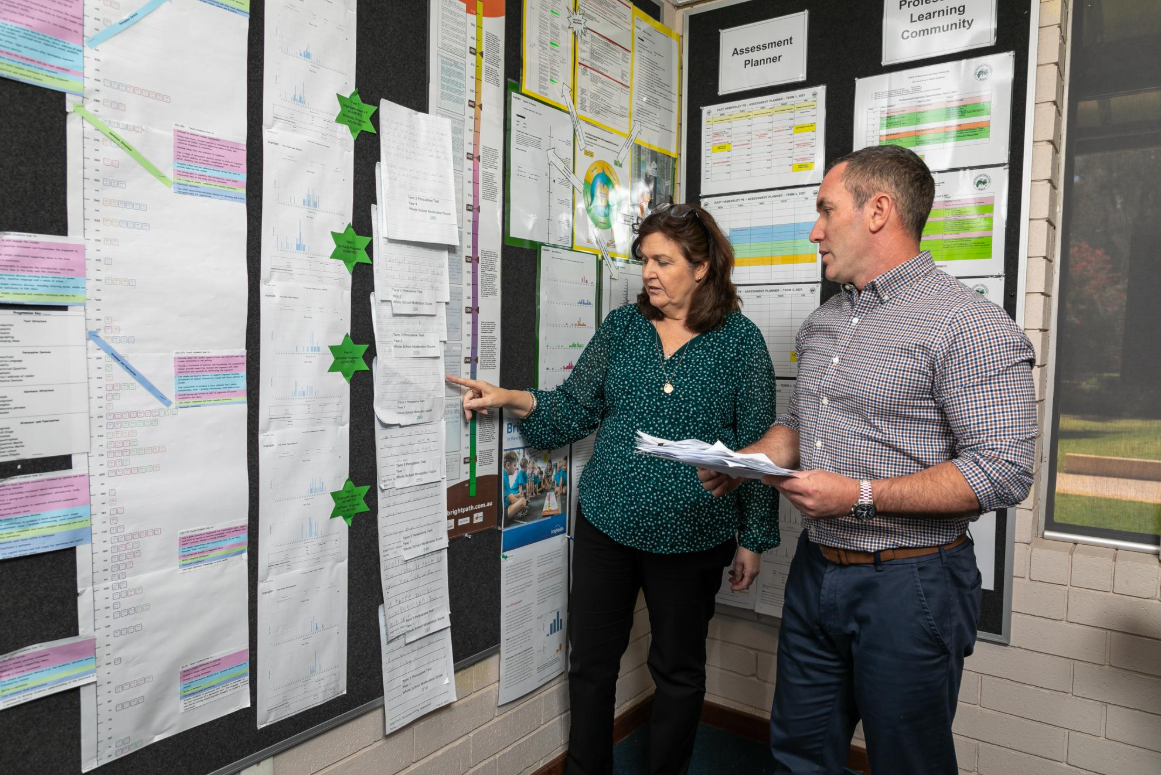
In education, a PLC is a group of teachers, school leaders, and other education professionals who work together regularly to improve teaching practices and student learning outcomes. Instead of working in isolation, educators share knowledge, examine student progress, identify learning gaps, and develop practical solutions.
This article explains what PLC means in education, its key characteristics, benefits, examples, and how schools can establish effective Professional Learning Communities.
What Does PLC Mean in Education?
PLC stands for Professional Learning Community.
It refers to an organised group of educators who collaborate continuously to improve their professional knowledge, teaching skills, and students’ educational experiences.
A PLC is more than a regular staff meeting. It is an ongoing process in which teachers work towards shared educational goals, examine evidence of student learning, discuss teaching challenges, and apply new strategies in their classrooms.
For example, a group of mathematics teachers may notice that students are struggling with fractions. They can form a PLC to discuss the problem, share teaching resources, explore different instructional methods, and evaluate whether their new approaches help students understand the topic.
The main purpose is to create a culture in which teachers take collective responsibility for student success.
Main Objectives of a PLC in Education

Professional Learning Communities are designed to improve both teacher performance and student learning. Their objectives include:
1. Improving Teaching Quality
Teachers discuss instructional methods, exchange classroom experiences, and explore new approaches to make lessons more effective.
2. Supporting Student Achievement
Educators examine student performance and identify areas where learners need additional support.
3. Encouraging Continuous Professional Development
A PLC provides teachers with regular opportunities to learn from colleagues, research, training materials, and classroom experiences.
4. Promoting Collaborative Learning
Teachers work together rather than relying exclusively on individual knowledge and experience.
5. Developing Problem-Solving Skills
Educators collectively identify classroom challenges and develop solutions based on evidence and practical experience.
6. Building a Positive School Culture
PLCs encourage trust, communication, shared responsibility, and professional respect among school staff.
Key Characteristics of an Effective PLC
Not every teacher meeting qualifies as a Professional Learning Community. An effective PLC has several important characteristics.
1. Shared Vision and Goals
Members work towards a common educational purpose. Their goals should focus on improving teaching quality and student learning rather than simply completing administrative tasks.
For example, a school may establish a goal of improving reading comprehension among students in Grades 4 to 6.
2. Collaborative Culture
Teachers openly share ideas, teaching materials, experiences, and challenges. They support one another and recognise that improving education is a collective responsibility.
3. Focus on Student Learning
Student progress remains central to PLC activities. Teachers discuss what students are learning, which students need additional assistance, and what instructional changes may improve outcomes.
4. Continuous Professional Development
Members regularly develop their professional knowledge through discussions, workshops, peer observations, educational research, and reflective practice.
5. Shared Leadership
Although school principals and coordinators may guide the process, teachers should have opportunities to lead discussions, organise activities, and contribute to decisions.
6. Evidence-Based Decision-Making
Effective PLCs use classroom assessments, student work, attendance information, and other relevant evidence to understand educational challenges and evaluate teaching strategies.
7. Trust and Mutual Respect
Teachers must feel comfortable discussing difficulties without fear of blame or embarrassment. Constructive feedback and professional respect help create a productive learning environment.
How Does a PLC Work in a School?
A Professional Learning Community generally follows a continuous cycle of identifying learning needs, planning improvements, implementing strategies, and evaluating results.
Step 1: Identify a Learning Challenge
Teachers begin by identifying an issue affecting student learning.
Examples include:
- Poor reading comprehension
- Low mathematics performance
- Limited classroom participation
- Difficulty understanding science concepts
- Weak writing skills
- Lack of engagement in online learning
Step 2: Analyse Student Performance
The PLC examines relevant evidence to understand the problem. Teachers may review test results, assignments, classroom observations, and student feedback.
Step 3: Develop an Improvement Plan
Members discuss possible solutions and agree on teaching strategies to try.
For example, teachers may decide to introduce small-group activities, visual learning materials, additional practice sessions, or peer-assisted learning.
Step 4: Implement Teaching Strategies
Teachers apply the agreed methods in their classrooms. They document their experiences and observe how students respond.
Step 5: Review the Results
The group meets again to examine student progress and determine whether the strategies are effective.
Step 6: Improve and Repeat
If the approach works, teachers can continue or expand it. If the results are limited, they can modify the strategy and test another approach.
This cycle makes professional development continuous and connected to actual classroom needs.
Examples of PLC in Education
Professional Learning Communities can operate across different subjects, grade levels, and educational settings.
Example 1: Mathematics Teachers’ PLC
A group of mathematics teachers notices that students are struggling with multiplication and division.
The teachers:
- Review assessment results.
- Identify common mistakes.
- Share different teaching methods.
- Create additional practice activities.
- Introduce visual learning resources.
- Compare student performance after implementation.
This collaboration helps teachers understand which approaches are more effective for their students.
Example 2: English Language Teachers’ PLC
English teachers form a PLC to improve students’ reading and writing skills.
They may share reading materials, discuss grammar instruction, develop writing exercises, and review student assignments together.
The group can also introduce reading circles and peer-review activities to encourage active participation.
Example 3: Science Teachers’ PLC
Science teachers collaborate to make difficult concepts easier to understand.
They may develop practical experiments, create classroom demonstrations, share laboratory resources, and discuss how to teach complex topics through real-world examples.
Example 4: Inclusive Education PLC
Teachers, special educators, counsellors, and school leaders collaborate to support students with different learning needs.
They discuss classroom accessibility, differentiated instruction, suitable learning materials, and ways to encourage participation.
The objective is to make learning more inclusive and responsive to individual student needs.
Example 5: School-Wide PLC
A school creates a PLC involving teachers from multiple subjects and grade levels.
The group focuses on improving attendance, student engagement, classroom behaviour, and overall academic performance.
This approach allows educators to address challenges that affect the entire school rather than only one subject.
Benefits of PLC in Education

Professional Learning Communities can benefit teachers, students, school administrators, and the wider educational institution.
Benefits for Teachers
Better teaching skills: Teachers learn new instructional methods and gain practical ideas from colleagues.
Professional confidence: Sharing experiences and receiving constructive feedback can help teachers become more confident in their classroom decisions.
Reduced professional isolation: Teachers have opportunities to discuss challenges and receive support from other educators.
Continuous learning: Regular collaboration encourages teachers to keep developing their knowledge and professional abilities.
Leadership opportunities: Teachers can lead projects, coordinate discussions, and contribute to school improvement.
Benefits for Students
Improved learning experiences: Teachers can introduce better teaching methods based on shared knowledge and classroom evidence.
More targeted support: Educators can identify students who need additional help and plan suitable interventions.
Greater engagement: Collaborative planning can produce more interactive lessons and learning activities.
Consistent teaching approaches: Teachers working across the same grade or subject can coordinate learning objectives and expectations.
Benefits for Schools
Stronger teamwork: PLCs improve communication and collaboration among school employees.
Continuous improvement: Schools can identify challenges, implement solutions, and review progress systematically.
Better use of resources: Teachers can share lesson plans, learning materials, technology, and professional expertise.
Positive school culture: A collaborative environment can encourage trust, accountability, and professional growth.
These benefits depend on how well the PLC is organised. Simply scheduling regular meetings does not automatically improve teaching or academic performance.
PLC vs Traditional Teacher Meetings
A Professional Learning Community differs from a conventional staff meeting in its purpose and activities.
| Feature | Professional Learning Community | Traditional Staff Meeting |
|---|---|---|
| Main purpose | Improve teaching and student learning | Share information and handle administration |
| Focus | Professional development and student progress | Announcements and school operations |
| Participation | Collaborative and interactive | Often led by administrators |
| Activities | Research, reflection, planning, and assessment | Updates, instructions, and discussions |
| Frequency | Regular and ongoing | Scheduled as needed |
| Outcomes | Improved teaching practices and learning support | Decisions and administrative coordination |
Traditional meetings are important for school management, but they do not replace the continuous learning and collaborative inquiry that define a PLC.
How to Establish a PLC in a School
Schools can establish a Professional Learning Community by following a structured approach.
1. Define the Purpose
Start by identifying what the PLC should achieve. The purpose could involve improving literacy, strengthening mathematics instruction, supporting inclusive education, or developing digital teaching skills.
2. Create Collaborative Teams
Organise teachers into suitable groups based on subject areas, grade levels, professional interests, or specific student learning needs.
3. Schedule Regular Meetings
Provide dedicated time for teachers to collaborate. Meetings should have a clear agenda and focus on professional learning rather than unnecessary administrative work.
4. Encourage Open Communication
Create an environment where teachers can share successes and difficulties without feeling judged.
5. Use Relevant Data
Encourage members to review student work, assessment results, and classroom observations before deciding which strategies to implement.
6. Develop an Action Plan
Each PLC should agree on practical activities, responsibilities, timelines, and measurable improvement goals.
7. Monitor Progress
Review the impact of teaching strategies regularly. Use the findings to improve future planning.
8. Provide Leadership Support
School leaders should provide time, resources, guidance, and opportunities for teachers to take responsibility for professional learning.
Role of School Leaders in PLC Development
School principals and academic coordinators play an important role in establishing and sustaining effective PLCs.
Their responsibilities include:
- Creating a shared vision for professional learning.
- Providing time for collaborative activities.
- Encouraging teacher participation and leadership.
- Arranging professional development resources.
- Supporting classroom observations and peer feedback.
- Helping teams identify measurable goals.
- Reviewing progress without creating a culture of blame.
The National Curriculum Framework for School Education in India highlights the importance of teacher collaboration, shared reflection, peer learning, and school-level professional development. It also recognises the role of school leadership in creating conditions that support collaboration.
PLC in the Indian Education System
Professional Learning Communities are relevant to Indian schools because teachers often face common challenges involving large classrooms, different learning levels, language diversity, limited resources, and changing curriculum expectations.
Collaborative teacher learning can help schools address these issues through shared planning and practical classroom improvements.
The National Council of Educational Research and Training (NCERT) has published work discussing Professional Learning Communities and their contribution to continuous professional development and school improvement.
The National Curriculum Framework for School Education also emphasises teacher collaboration, subject-based groups, peer review, classroom observation, and professional reflection.
Schools in India can use PLCs at different levels:
- School level: Teachers from the same school collaborate on teaching and student learning.
- Cluster level: Educators from nearby schools share resources and experiences.
- Subject level: Teachers teaching the same subject exchange lesson plans and instructional strategies.
- Grade level: Teachers working with the same age group coordinate learning activities.
- Online level: Educators from different locations collaborate through digital platforms.
These activities can complement formal teacher training and ongoing professional development initiatives.
Challenges of Implementing PLCs
Although PLCs offer several advantages, schools may face difficulties when trying to establish them.
Limited Time
Teachers already have teaching, assessment, and administrative responsibilities. Finding dedicated collaboration time can be difficult.
Possible solution: Include PLC sessions in the school timetable and keep meetings focused.
Lack of Participation
Some teachers may hesitate to share their challenges or participate in group discussions.
Possible solution: Build trust, encourage equal participation, and recognise teachers’ contributions.
Weak Leadership Support
Without administrative support, PLC activities may become irregular or lose direction.
Possible solution: School leaders should provide resources, clear goals, and consistent encouragement.
Lack of Clear Objectives
Meetings without specific learning goals can become unproductive.
Possible solution: Establish measurable objectives and use a structured meeting agenda.
Difficulty Measuring Progress
It may be challenging to determine whether a new teaching strategy has improved learning.
Possible solution: Use appropriate evidence, such as student assignments, assessments, classroom observations, and feedback.
How to Measure the Success of a PLC
Schools should evaluate PLC effectiveness through both teacher development and student learning.
Useful indicators include:
- Teacher participation in collaborative activities.
- Quality and consistency of lesson planning.
- Use of new teaching strategies.
- Evidence of peer learning and professional reflection.
- Improvement in identified student learning gaps.
- Student engagement and classroom participation.
- Progress towards agreed educational goals.
Schools should avoid relying on a single test score or attendance figure to judge the success of a PLC. Improvements in teaching practice, student confidence, and classroom participation may also provide valuable evidence.
Frequently Asked Questions About PLC in Education
1. What does PLC stand for in education?
PLC stands for Professional Learning Community. It is a collaborative group of educators who work together to improve teaching methods, professional knowledge, and student learning outcomes.
2. What is the main purpose of a PLC?
The main purpose of a PLC is to improve education through continuous teacher collaboration, professional development, shared problem-solving, and a focus on student learning.
3. Who participates in a PLC?
A PLC generally includes teachers and may also involve school principals, academic coordinators, special educators, counsellors, and other education professionals.
4. What are the five characteristics of an effective PLC?
Five important characteristics are shared goals, collaborative learning, focus on student outcomes, continuous professional development, and supportive leadership. Trust and evidence-based reflection are also essential.
5. How often should a PLC meet?
There is no universal schedule. Many schools arrange weekly, fortnightly, or monthly sessions depending on their resources and goals. Consistency and purposeful discussion are more important than meeting frequency alone.
6. What activities take place in a PLC?
Activities may include collaborative lesson planning, reviewing student work, discussing research, peer classroom observations, sharing teaching resources, analysing assessments, and developing improvement strategies.
7. What is the difference between PLC and professional development?
Professional development is a broad term for activities that improve educators’ knowledge and skills. A PLC is one approach to professional development that emphasises continuous collaboration, shared inquiry, and practical classroom improvement.
8. How does a PLC improve student performance?
A PLC helps teachers identify learning gaps, exchange effective teaching methods, plan targeted support, and review the results of classroom strategies. These activities can contribute to better student learning when implemented effectively.
9. Can PLCs operate online?
Yes. Teachers can use video meetings, discussion forums, shared documents, and digital learning platforms to collaborate with educators from other schools and locations.
10. Is a PLC only for school teachers?
No. Although PLCs are commonly used in schools, the approach can also be applied in colleges, universities, adult education programmes, and other learning environments.
Conclusion
A Professional Learning Community is an important approach to improving education through collaboration, continuous professional development, and shared responsibility for student success.
By working together, teachers can exchange knowledge, identify classroom challenges, explore effective teaching strategies, and evaluate the impact of their work. School leaders can strengthen this process by providing time, resources, and a supportive professional environment.
For schools seeking sustainable improvement, PLCs offer a practical way to make professional learning part of everyday teaching. Their greatest value comes when collaboration leads to meaningful changes in classroom practice and better learning opportunities for students.